
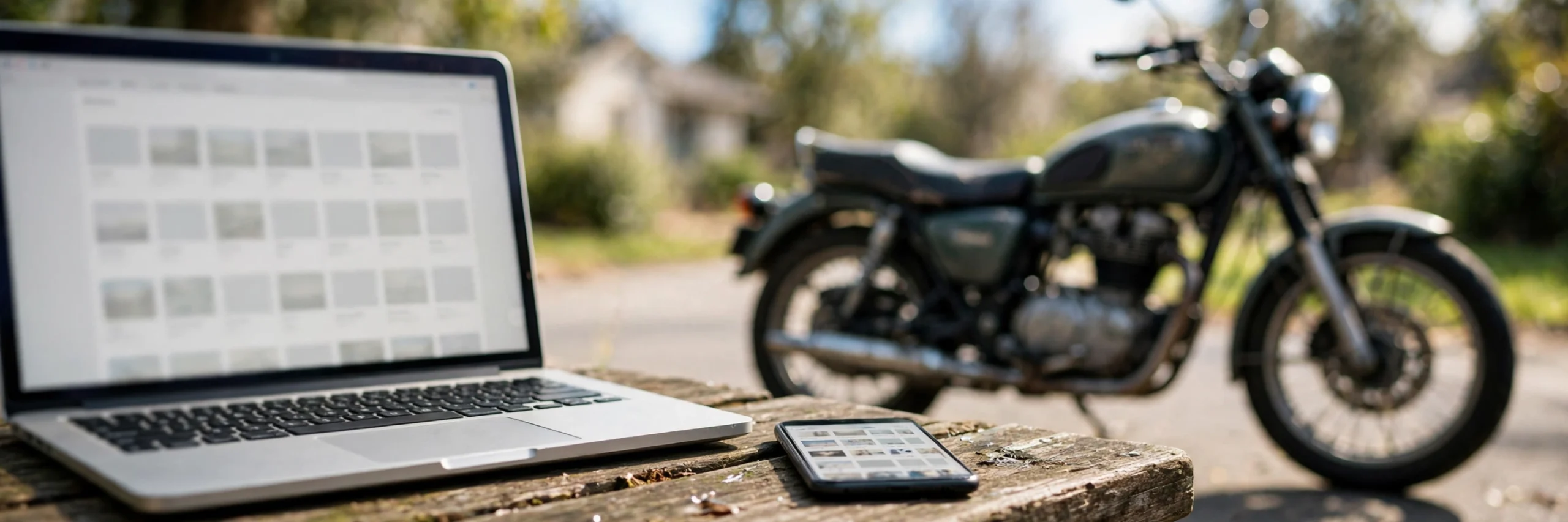
Selling a used motorcycle online is straightforward when you do the preparation first. Most bikes that sit unsold for weeks are not bad bikes; they are badly listed. They are overpriced, photographed in a dark garage, or described in two vague sentences. A clean bike, an honest price and a complete listing will usually sell in one to four weeks, and often faster. This guide walks through the process step by step.
Step 1: Price it from sold listings, not asking prices
The biggest mistake sellers make is pricing from what other people are asking rather than what bikes actually sold for. Check completed and sold listings on Cycle Trader and eBay Motors for your exact year, make, model and mileage, and use Kelley Blue Book or NADA Guides as a starting point. Price within five to ten percent of comparable sold bikes. A bike priced slightly below the local market sells quickly; a bike priced ten percent above it can sit for months. Be honest with yourself about condition, modifications and mileage, because buyers will find out anyway.
Step 2: Prepare the bike properly
A clean, well-presented bike sells faster and for more money. Wash the whole bike, including the wheels, chain, engine casing and exhaust. Polish chrome, touch up small paint chips with matched paint, and clean surface rust from brake rotors. Fix small, cheap problems: a dead battery, a worn grip, a cracked indicator lens. A pre-sale inspection from a licensed mechanic, usually 75 to 150 dollars, gives you a documented condition report that increases buyer confidence and supports your asking price. For bikes over 5,000 dollars, that report often pays for itself.
Step 3: Gather your paperwork before you list
Have the title, registration and service records ready before the first buyer asks. A clean title in your name, with no liens, removes the biggest objection in a private sale. Service records, receipts for recent work, and records of modifications show the bike was cared for. If you have the owner’s manual and a spare key, mention them; small details signal an organized seller. Know your local rules for transferring a title and completing a bill of sale, and have the form ready.
Step 4: Take photos that build trust
Photos sell the bike before the buyer reads a word. Shoot in natural daylight, ideally on an overcast day for even light, in a clean and uncluttered location. Take at least eight to twelve photos: both sides, front and rear, the instrument cluster showing the mileage, the tires, the engine, the chain and sprockets, and any damage or wear, photographed honestly. Include one photo of the VIN plate. Never hide damage; buyers who discover it in person will walk away, and honest photos filter out time-wasters. Wipe the lens, keep the background tidy, and do not use filters.
Step 5: Write a complete, honest description
Your listing should include the year, make, model, trim, mileage, modifications, service history highlights, reason for selling, and any known issues. Open with the key facts in the first two lines, then add detail. Mention recent maintenance: new tires, a fresh service, a new battery. Be specific about modifications and whether original parts are included. Say whether the price is firm or negotiable. A description that answers every question gets serious buyers; a two-line description gets low offers and endless questions.
Step 6: Choose the right platform
The best platform depends on whether you want a fast local sale or the widest audience. Facebook Marketplace is free and best for fast local cash sales. Cycle Trader reaches serious buyers across the country but charges a listing fee of roughly 25 to 50 dollars. eBay Motors works well for unusual or collectible bikes and supports auctions. Craigslist is still used but has declined because of scams. For most sellers, listing on one or two platforms is enough: Facebook Marketplace for local buyers plus Cycle Trader for national reach. If you need cash in 48 hours, instant-buy services will make an offer and collect the bike, but expect 70 to 85 percent of retail value.
Step 7: Handle buyers and test rides safely
Respond to messages within a couple of hours; slow replies lose buyers to faster sellers. Ask serious buyers for proof of funds before a test ride, and meet in a public place such as a police station parking lot. For test rides, hold the buyer’s full payment or their car keys and driving licence as security, and confirm they have a motorcycle licence and insurance. Trust your instincts: a buyer who avoids questions, pressures you, or offers strange payment methods is not worth the risk.
Step 8: Close the sale securely
Accept cash or a verified bank transfer only. Avoid personal cheques, wire transfers to strangers, and overpayment scams where the buyer “accidentally” sends too much and asks for a refund. Complete a bill of sale with the date, price, VIN, mileage and both signatures, transfer the title immediately, and notify your insurer. Keep copies of everything. Once the money is confirmed in your account, hand over the keys and the paperwork together.
Final thought
Selling a motorcycle online fast is not about tricks. Price it from real sold listings, prepare it properly, photograph it honestly, describe it completely, and list it where serious buyers look. Dealers who do this well sell bikes every week; a private seller who follows the same steps gets the same result. And if you are a dealer, the same habits apply at scale: clean listings, honest photos and quick replies are what turn a dealership’s website into a sales machine.